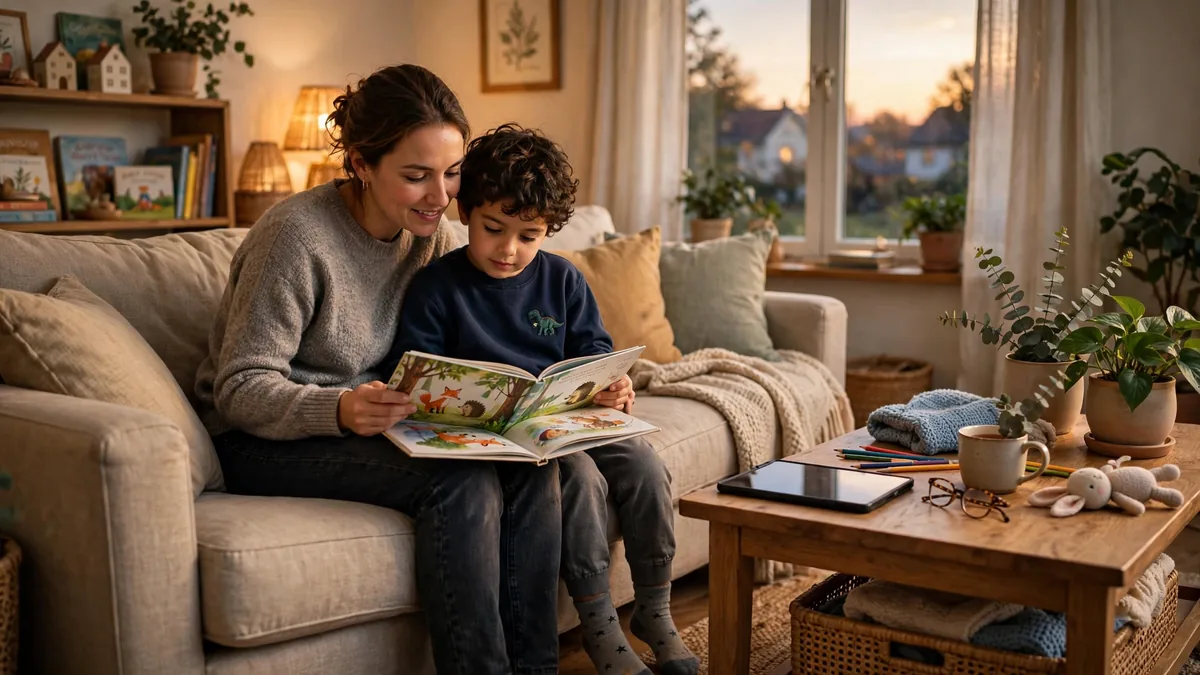


Learning to read is one of the biggest milestones of childhood, and phonics for beginners is where that journey usually starts. Phonics is simply the method of teaching children to connect letters with the sounds they make, so that unfamiliar words stop being a mystery and become something they can work out for themselves. For parents, the good news is that you do not need teaching qualifications or expensive materials to support this at home. Short, regular practice with sounds, blending and simple words builds the foundation that every later reading skill depends on, from early picture books to confident independent reading at school.
What Phonics Is and Why It Works for Beginner Readers
English is an alphabetic language: the letters on the page are a code for the sounds of speech. Phonics teaches children that code directly. A child who knows that the letter c usually makes a “kuh” sound, a makes a short “ah” sound and t makes a “tuh” sound can blend those sounds together and read the word cat without ever having seen it before. That ability to decode new words independently is what separates phonics from simply memorising whole words by sight.
This matters because beginner readers meet new words constantly. A child who can sound out unfamiliar words keeps reading and keeps learning; a child who can only recognise memorised words quickly gets stuck. Phonics also supports spelling, because writing a word uses the same code in reverse: the child listens for the sounds in a word and chooses letters to represent them. Reading and writing therefore grow together, which is why phonics sits at the heart of early literacy teaching in primary schools.
Getting Ready: Skills That Come Before Phonics
Phonics works best when a few foundations are already in place, and parents build most of them through everyday life. The first is oral language: children who hear plenty of conversation, stories and songs have a larger vocabulary to draw on when they start decoding, because a word they have heard before is far easier to read than a completely new one. Reading aloud to your child every day, even for ten minutes, is the single most valuable preparation you can give.
The second foundation is print awareness: understanding that books are read from front to back, pages turn in order, and print runs from left to right in English. Children pick this up naturally when they sit with an adult and a book. Creating a calm, inviting corner for books helps too; our guide on creating a positive learning space that motivates your child shows how a small, well-chosen reading spot can turn practice into something children look forward to rather than a chore.
Finally, children benefit from playing with sounds before they ever see letters. Rhyming games, clapping the beats in words, and spotting words that start with the same sound all train the ear to hear the separate sounds inside words, which is exactly the skill phonics builds on.
The Sounds to Teach First
Beginners do not learn the alphabet in order from A to Z. Most phonics programmes introduce a small group of high-value sounds first, chosen so that children can build real words almost immediately. A widely used starting group is s, a, t, p, i, n: with just these six sounds, a child can blend sat, pin, tap, pat, tin, sip and many more. Early success matters, because blending a real word in the first week gives a beginner a powerful sense of achievement.
Teach one sound at a time and keep the focus on the sound itself rather than the letter name. The letter s is called “ess”, but the sound it makes in words is a simple hiss, and it is the sound your child needs for decoding. Show the letter, say the sound, and let your child trace the letter shape with a finger while saying the sound aloud. Connecting the sight, the sound and the movement helps the pairing stick. Add a new sound only when the previous ones are secure, and keep revisiting older sounds so they are not forgotten as new ones arrive.
Blending: Turning Sounds into First Words
Blending is the moment phonics becomes reading. Once your child knows a handful of sounds, place three letter cards or write three letters on paper: s – a – t. Point to each letter, say each sound, then sweep your finger under the word and run the sounds together: “sssaaat… sat!” At first your child may need to hear the sounds many times before they merge. That is normal. Keep the words short, change one letter at a time (sat, pat, pit, pin), and celebrate every successful blend.
Work in the opposite direction as well. Say a simple word slowly, stretching its sounds, and ask your child to write or build it with letter cards. This segmenting skill strengthens spelling and deepens the understanding that words are made of sounds. Short decodable books, written to use only the sounds a child has learned, are ideal at this stage because every word on the page is one your child can genuinely work out. Activities that nurture curiosity help here too, as our article on fostering curiosity and creativity in kids explains: children who are encouraged to explore and ask questions bring that same energy to cracking the reading code.
A Simple Daily Phonics Routine at Home
Consistency beats length. Ten to fifteen focused minutes a day will do far more for a beginner than one long session at the weekend. A routine that works well for many families looks like this: spend two minutes reviewing the sounds your child already knows using letter cards; introduce or practise one newer sound for a few minutes; spend five minutes blending simple words and reading a few pages of a decodable book; and finish with a game so the session ends on a high note.
Fit the routine into a moment that already exists, such as after breakfast or before the bedtime story, so it becomes part of the day rather than another task to schedule. Keep the atmosphere light. If your child is tired or frustrated, stop and try again tomorrow: phonics for beginners should feel like play with a purpose, not a test. Note down which sounds are secure and which need more practice, because that little record stops you repeating what is already mastered and helps you spot the sounds to revisit. Over time, this gentle structure also builds your child’s ability to work independently, a theme we explore in our guide to fostering independence and responsibility in everyday life.
Games and Activities That Make Phonics Stick
Play is how young children learn best, and phonics lends itself to games easily. Try a sound treasure hunt: write target letters on sticky notes, hide them around a room, and ask your child to find and name the sound on each one. Play “I spy” with sounds instead of letters: “I spy something beginning with ‘mmm’.” Make a simple matching game with word and picture cards using words your child can decode. Magnetic letters on a fridge turn waiting time into blending practice, because children love building silly words as much as real ones.
Songs and rhymes with actions keep sounds memorable, and drawing or building letters from playdough, sand or finger paint gives the letter shapes a physical memory. The key principle is repetition without boredom: the same sounds, met in many different playful forms, until recognising them becomes automatic. Automatic recall is the goal, because a child who no longer has to think hard about each sound has attention left over for understanding the story.
Common Mistakes Parents Make
A few pitfalls are worth avoiding. Teaching letter names instead of sounds at the start is the most common: names are useful later, but decoding runs on sounds. Moving too fast is another; a shaky sound learned this week becomes a stumbling block next month, so secure each step before adding more. Avoid guessing games that encourage your child to predict words from pictures rather than decode them, since that habit works against phonics. And try not to correct every error sharply; instead, praise the attempt, model the correct sound, and let your child try again. Confidence is fragile at this stage and it fuels progress.
Finally, remember that children develop at different speeds. Some blend words within weeks; others need months of patient practice before it clicks, and both paths are normal. With steady sounds practice, playful repetition and plenty of stories shared together, phonics for beginners gives your child the code to unlock reading, and with it, every subject that follows.