
Every parent wants a child who reaches for a book without being asked. The good news is that readers are not born — they are built, one small routine at a time. If you want to build a reading habit in children, you do not need expensive programs or a home library with hundreds of titles. You need consistency, the right books at the right moment, and an environment where reading feels like a pleasure rather than another homework task. This guide walks through the practical steps that turn reluctant readers into children who genuinely love books.
Why a Reading Habit Matters More Than Reading Level
Teachers often talk about reading levels, but the habit underneath matters far more. A child who reads for fifteen minutes every day encounters hundreds of thousands more words each year than a child who reads only when forced. That exposure quietly builds vocabulary, spelling, grammar, and general knowledge — and it shows up in every subject, not just English. Children who read regularly also concentrate for longer, write more clearly, and approach new topics with more confidence. Levels rise and fall with each school term; a daily habit compounds for life.
Start Small: Ten Minutes Every Day
The most common mistake parents make is aiming too high at the start. An hour of reading feels like a punishment to a child who is not yet hooked. Begin with just ten minutes at the same time each day — after breakfast, before bed, or straight after school. Same time, same place, every day: that repetition is what converts an activity into a habit. Once ten minutes feels easy, stretch it gradually. Protect the routine from competing distractions, too. Our guide to setting screen time rules for kids shows how to carve out calm, device-free pockets in the day where books can win.
Let Your Child Choose the Books
Children read more when they pick the material themselves. Comics, joke books, sports annuals, and stories about dinosaurs all count — the goal at this stage is pages turned, not literary prestige. Take your child to a library or bookshop and let them browse without steering them toward what you think they should read. If a book turns out to be too hard, park it for later rather than forcing a struggle. For younger children who are still decoding words, start with the basics in our phonics for beginners guide, which helps parents support early reading without turning it into a lesson.
Make Books Visible and Easy to Grab
Habits form around what is easy. A book left on the kitchen table gets picked up; a book shut in a cupboard does not. Keep a small rotating stack of books where your child already spends time — by the bed, on the sofa, even in the car. A simple bookshelf at child height, a reading corner with a cushion, or a weekly library trip all send the same signal: books are part of everyday life here. Rotating the selection every week or two keeps the shelf feeling fresh without buying anything new.
Read Together — and Talk About It
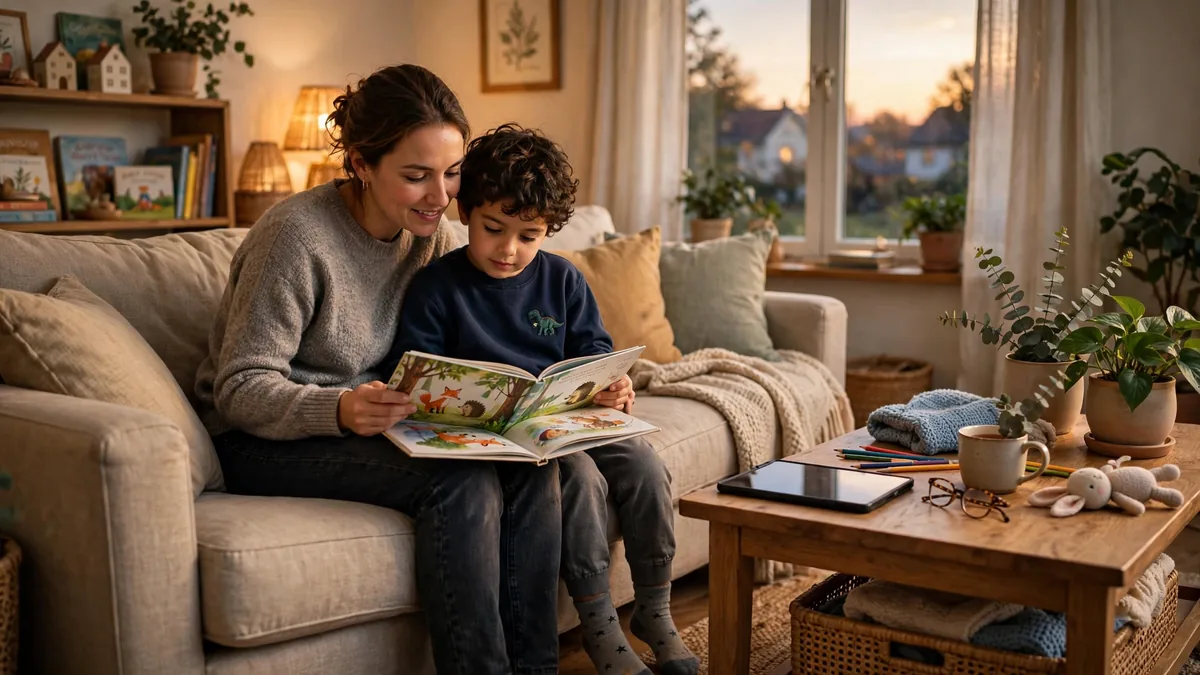
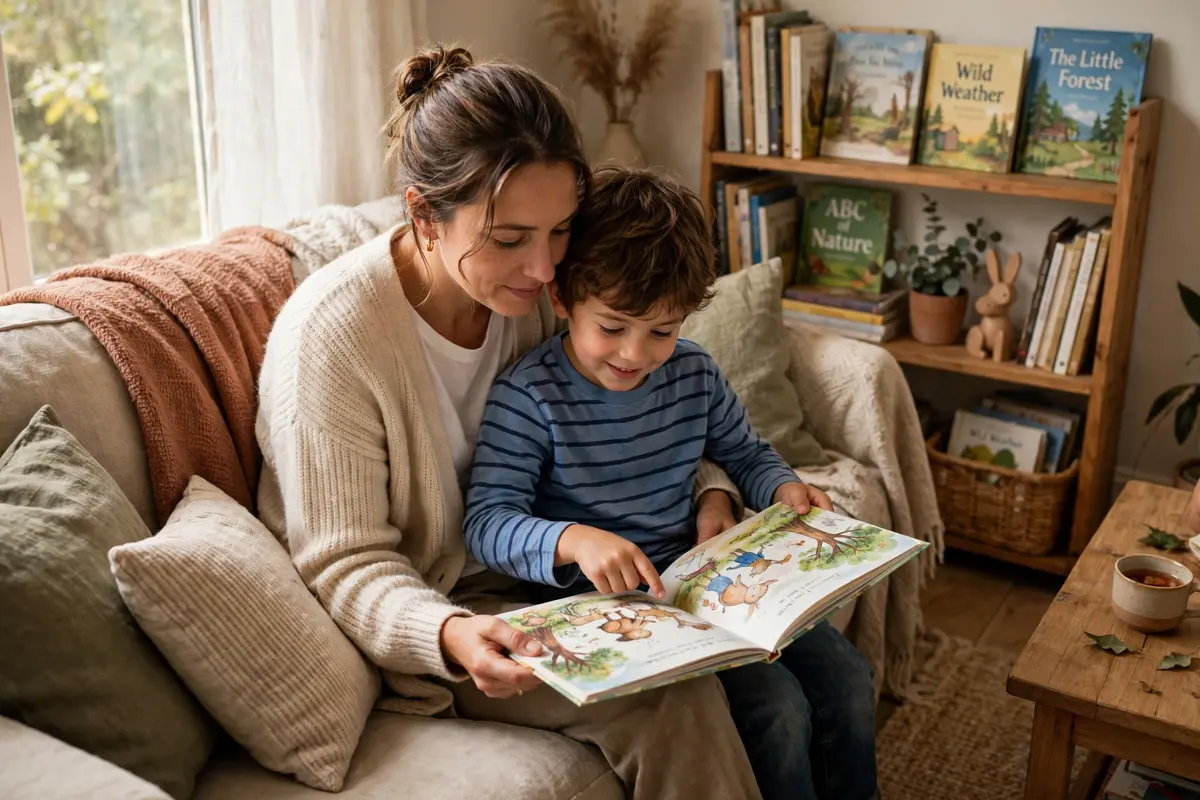
Shared reading is the engine of the habit, especially before the age of ten. Reading aloud to your child, taking turns with pages, and asking simple questions (“What do you think happens next?” “Which character do you like best?”) turns reading into a conversation rather than a test. Talk about stories at other times too — at dinner, on walks, in the car. Children copy what they see, so let them catch you reading for pleasure as well. These small moments also support broader development: the same curiosity you feed with books can be nurtured through play and projects, as explored in our article on fostering curiosity, creativity, and lifelong learning in kids.
Build Independence Gradually
As the habit takes root, hand over more control. Let your child keep a simple reading log, choose the next book in a series, or read a chapter alone before you discuss it together. Older children can fold reading into their wider study routine — our guide to creating a personalized study plan shows how families schedule reading alongside homework without overload. This gradual handover mirrors how children grow in other areas, much like the steps used to foster independence and responsibility in everyday life. The aim is a child who no longer needs you to start the reading session — they start it themselves.
Use Screens as a Bridge, Not a Rival
Tablets and phones do not have to be the enemy. Audiobooks on car journeys, e-books on holiday, and well-chosen reading apps can all add reading minutes to a busy week. The trick is to position them as another way into stories, not a replacement for print. Approaches from blended learning — mixing digital and traditional methods — work just as well at home as they do in classrooms. If a screen version of a story gets your child hooked, follow it up with the paper book.
Mistakes That Quietly Kill the Habit
A few common habits undo parents’ best efforts. Turning reading into a chore or a punishment (“no TV until you finish that chapter”) teaches children that books are the obstacle, not the reward. Correcting every misread word breaks the flow and the confidence; let small errors pass and revisit tricky words later. Comparing your child with siblings or classmates rarely motivates and often backfires. Finally, giving up after a slow month is the biggest mistake of all — habits wobble before they stick, and a gentle return to the ten-minute routine almost always works.
To build a reading habit in children, think in months, not days. Protect a small daily routine, offer books your child actually wants, read together often, and step back as their independence grows. Do that consistently, and one evening you will find your child reading under the covers with a torch — the surest sign the habit has taken hold.
A Simple Seven-Day Starter Plan
If the routine feels hard to start, shrink the commitment further: one week, one small promise. On day one, let your child choose any book at all — a comic counts. On day two, read ten minutes together after dinner. On day three, swap roles and let them read a page to you. On day four, visit a library or swap books with a friend. On day five, ask them to retell the story so far in their own words. On day six, let them stay up fifteen minutes late — but only for reading in bed, a privilege children rarely refuse. On day seven, talk about which book comes next and put it by the bed. By the end of the week you have not just seven reading sessions; you have a rhythm, a favourite spot, and a child who knows what happens at reading time. Repeat the rhythm the following week, and the habit has somewhere solid to grow from.