

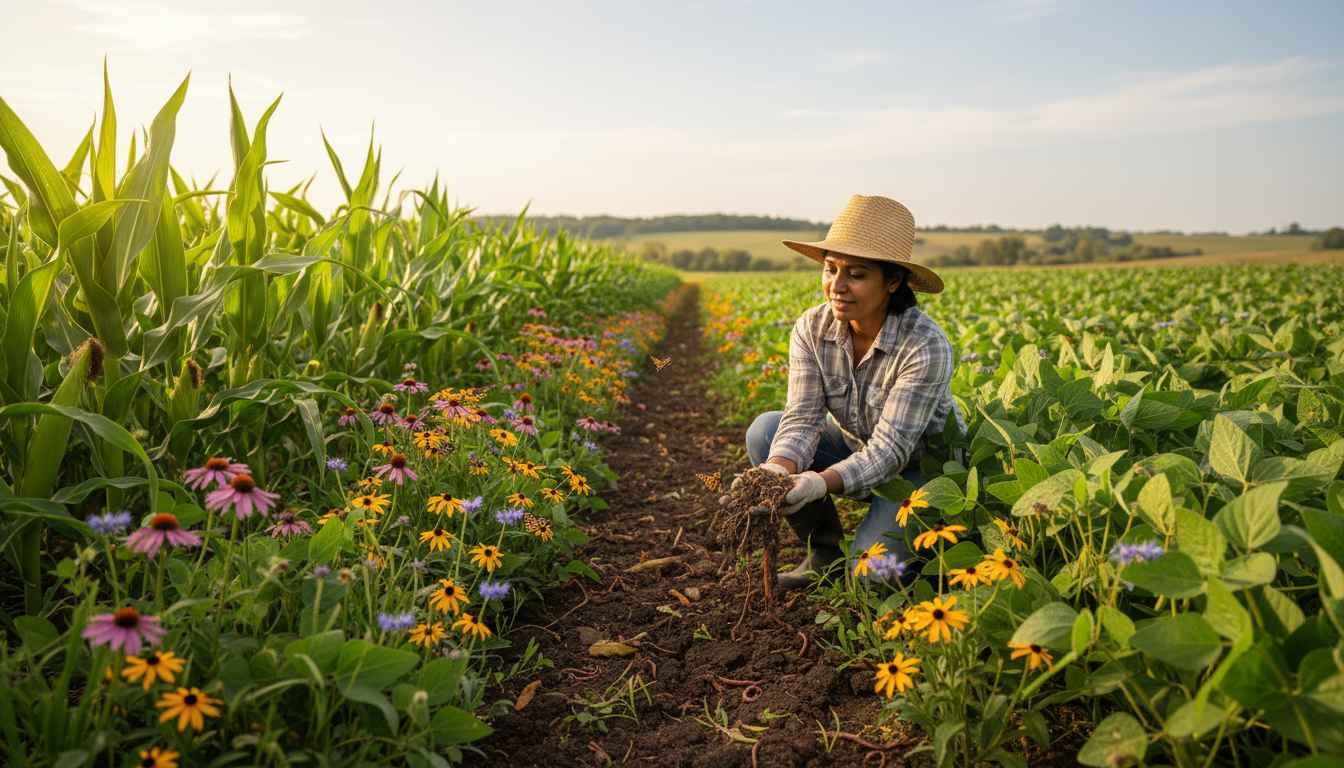
Don’t panic, but every time we plow a field or plant a seed, we’re setting off a cascade of effects that ripple through entire ecosystems. I learned this the hard way while walking through my early spring greenhouse, noticing how even small changes in soil and water use could subtly alter the tiny world beneath my feet. Agriculture is often viewed as a simple act of growing crops, but it is, in fact, a complex interaction with countless organisms – from the soil microbes to pollinating insects, to birds and small mammals living on the edges of our fields.
Over the years, I’ve kept a diary of observations in my farm. I noticed that areas where I applied organic compost had a visibly richer soil structure. Worms and microbial life flourished, creating a network that not only nourished my plants but also stabilized the soil. Conversely, fields with heavy synthetic fertilizers seemed to support fewer of these beneficial organisms, which eventually affected the crop health in subtle ways. These early observations made me realize that agriculture doesn’t just feed humans; it fundamentally reshapes the living environment around it.
Quick Definitions
Organisms – Any living thing, including plants, animals, fungi, bacteria, and other microorganisms.
Agroecosystem – A farming system that includes crops, soil, water, and organisms interacting as a unit.
Soil Microbes – Tiny bacteria and fungi that decompose organic matter, recycle nutrients, and support plant growth.
Soil is often the first point of contact where agriculture impacts organisms. Healthy soil hosts a vast array of life, from microbes to insects, which are essential for nutrient cycling. When we overuse pesticides or fertilizers, we risk killing off beneficial organisms that would naturally keep plant diseases in check. For instance, nitrogen-based fertilizers can increase crop yields, but excess application can lead to nutrient runoff, creating imbalances that harm aquatic organisms downstream. Seeing this firsthand on my farm prompted me to explore sustainable techniques such as cover cropping and crop rotation, which help maintain a vibrant soil ecosystem while still supporting strong harvests.
Water management is another critical factor. Agriculture can drastically affect the availability and quality of water for organisms. Irrigation can create habitats for certain aquatic life but may also lead to reduced water flow in nearby rivers and streams, affecting fish and amphibians. Contaminants from chemical fertilizers or pesticides can accumulate, making water unsafe for organisms that rely on it. By switching to drip irrigation and reducing chemical inputs, I noticed a remarkable improvement in nearby pond ecosystems, including an increase in dragonflies and frogs, signaling a healthier environment.
Pollinators like bees, butterflies, and other insects are directly impacted by agricultural practices. Monoculture farming, which involves planting a single crop over large areas, often leads to a scarcity of diverse floral resources for pollinators. On my farm, when I planted a mixture of flowers along the borders of vegetable beds, I observed more bees visiting not just the flowers but also the crops themselves, improving fruit set naturally. This hands-on experience aligns with research suggesting that diversified planting can boost pollinator populations and overall ecosystem resilience.
Even above-ground animals feel agriculture’s reach. Birds and small mammals may lose nesting areas when natural vegetation is cleared. In some cases, they adapt by feeding on crops, creating conflicts. I experimented with leaving hedgerows and small buffer zones around fields, which not only preserved habitats but also allowed natural pest control by predators such as birds and beneficial insects. Maintaining these zones can support biodiversity while keeping farms productive, demonstrating a balance between agricultural needs and ecological responsibility.
On a microbial scale, agriculture reshapes the composition of soil communities. My observations over several seasons showed that plots with heavy chemical inputs had fewer microbial species compared to organically managed plots. This diversity matters because a rich microbial community improves nutrient cycling, disease suppression, and soil structure. According to the USDA National Organic Program, maintaining healthy soil biology is critical for sustainable crop production and long-term environmental health.
Another subtle yet important effect is on decomposition and nutrient cycling. When crop residues are removed or burned, soil organisms lose vital resources. I started leaving green manure and composting plant residues directly in the soil, and over time I noticed stronger plant growth and more earthworm activity. This demonstrates a principle in organic agriculture: supporting organisms through natural cycles enhances productivity without relying heavily on external chemical inputs. It’s a lesson in working with nature rather than against it.
For those curious about sourcing sustainable inputs, I often rely on trusted distributors for seeds and plants that support ecological balance. For example, Ball Seed offers high-quality seeds that are suited for creating diverse plantings, which in turn encourage beneficial organisms on the farm. Choosing the right plant varieties can directly influence the local ecosystem, from attracting pollinators to supporting soil microbes.
Potential Drawbacks
Despite best efforts, agricultural practices can carry drawbacks for organisms. Large-scale farming can fragment habitats, reduce biodiversity, and cause chemical accumulation. Even organic farming is not entirely impact-free if it leads to overuse of land or water. Farmers and gardeners should be aware that every intervention in an ecosystem has consequences, and responsible management is crucial. Additionally, some practices may inadvertently favor pests or invasive species, requiring careful monitoring and adaptive strategies.
Climate change adds another layer of complexity. Altered rainfall patterns, rising temperatures, and extreme weather events can amplify agriculture’s effects on organisms. On my farm, I’ve had to adjust planting schedules and irrigation techniques to accommodate these changes, always observing how the living organisms respond. Adapting to shifting conditions while preserving ecosystem health is now a core part of sustainable agriculture planning.
Overall, agriculture’s impact on organisms is both profound and multifaceted. From soil microbes to pollinators and above-ground wildlife, farming practices can either support or hinder the delicate balance of ecosystems. Keeping a diary of observations, experimenting with sustainable techniques, and sourcing responsible inputs are all ways I ensure my farm contributes positively rather than depleting the natural world. Agriculture, when practiced with care and awareness, can nurture life in ways that are often invisible yet vital for our environment and our food security.
For anyone working the land, it’s essential to see beyond yield alone. Observing the effects on organisms, adjusting practices, and fostering diversity can create a resilient system where both crops and wildlife thrive. The story of agriculture is not just about plants growing; it is about the dynamic relationships we cultivate with every organism that shares the soil, air, and water around us.