

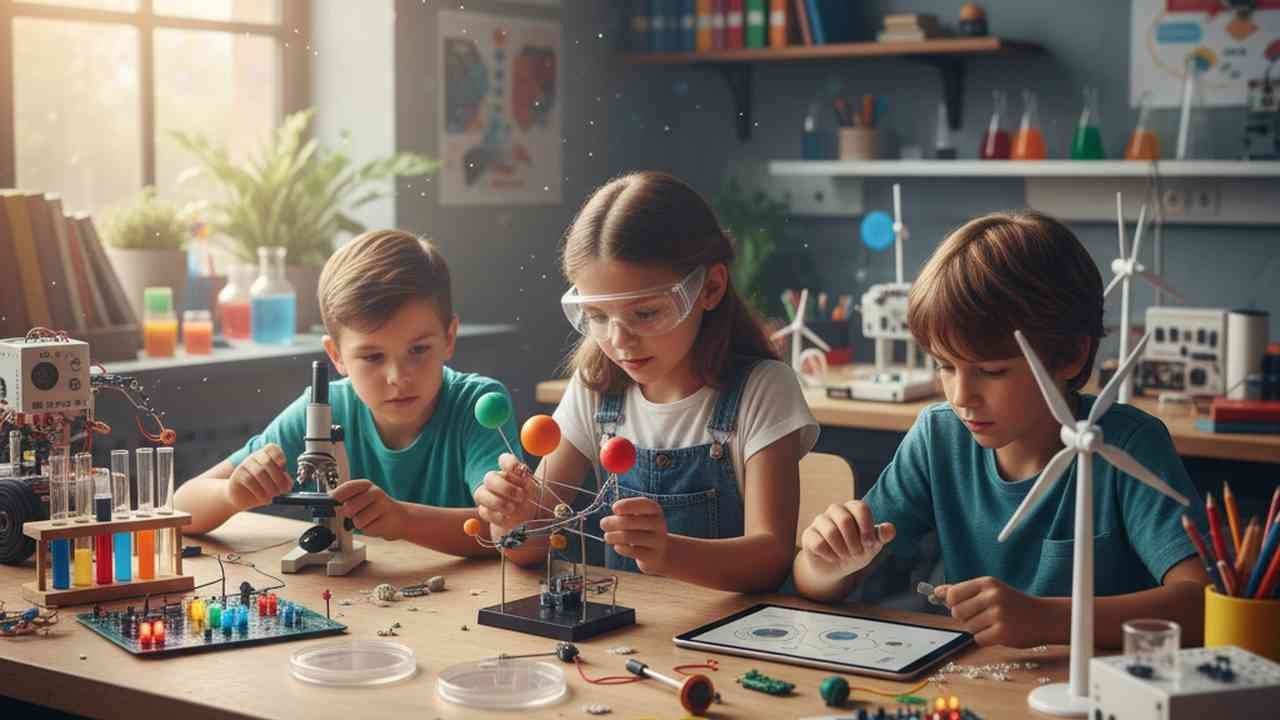
In a world where information is abundant yet fleeting, the challenge lies not in acquiring knowledge but in retaining it. Traditional methods of teaching often fall short in ensuring long-term comprehension, especially in complex subjects like science. Enter hands-on STEM kits – a revolutionary approach that transforms abstract concepts into tangible experiences, making learning not only effective but also exhilarating. These kits are more than just educational tools; they are gateways to a deeper understanding of the world around us, fostering curiosity, critical thinking, and a lasting passion for science.
The Power of Experiential Learning
Imagine a child constructing a simple circuit and witnessing a bulb light up for the first time. The sense of accomplishment and wonder that accompanies such moments is unparalleled. Hands-on STEM kits capitalize on this by immersing learners in activities that require active participation. This experiential learning approach engages multiple senses, creating stronger neural connections that enhance memory retention. Studies have shown that students who engage in hands-on activities retain information significantly better than those who rely solely on passive learning methods. By manipulating materials and observing real-time results, learners internalize scientific principles more effectively, leading to a profound understanding that textbooks alone cannot provide.
Bridging the Gap Between Theory and Practice
One of the most significant challenges in science education is bridging the gap between theoretical knowledge and practical application. Hands-on STEM kits address this issue by providing students with the opportunity to apply what they’ve learned in a controlled, supportive environment. Whether it’s building a model of the solar system or programming a simple robot, these kits allow learners to see the real-world implications of scientific concepts. This connection between theory and practice not only reinforces learning but also sparks curiosity, encouraging students to explore further and ask questions that deepen their understanding.
Fostering Critical Thinking and Problem-Solving Skills
Science is not just about memorizing facts; it’s about developing the ability to think critically and solve problems. Hands-on STEM kits promote these skills by presenting challenges that require students to think creatively and analytically. As learners encounter obstacles and devise solutions, they develop resilience and adaptability – traits that are invaluable both in academics and in life. For instance, when a circuit doesn’t work as expected, students must troubleshoot, hypothesize, and test their ideas, mirroring the scientific method in action. This process cultivates a mindset geared toward inquiry and innovation, essential components of scientific literacy.
Encouraging Collaboration and Communication
Modern science is rarely a solitary endeavor; it thrives on collaboration and effective communication. Hands-on STEM kits often involve group activities that necessitate teamwork, discussion, and shared problem-solving. Through these collaborative experiences, students learn to articulate their ideas, listen to others, and work collectively toward a common goal. These interpersonal skills are crucial in scientific fields, where teamwork is often the key to success. Moreover, such collaborative environments create a sense of community and belonging, making learning a more engaging and enjoyable experience.
Enhancing Engagement Through Interactive Learning
Engagement is a cornerstone of effective learning. Hands-on STEM kits captivate students’ attention by transforming learning into an interactive adventure. The tactile nature of these kits – whether it’s mixing chemicals to create a reaction or assembling a mechanical device – makes the learning process dynamic and exciting. This active involvement not only maintains interest but also deepens understanding, as students are more likely to remember concepts they’ve experienced firsthand. The excitement of discovery and the joy of creation make science accessible and fun, breaking down barriers to learning and inspiring a lifelong interest in the subject.
Supporting Diverse Learning Styles
Every learner is unique, with distinct preferences and strengths. Hands-on STEM kits cater to this diversity by offering multiple modes of engagement. Visual learners can observe experiments, kinesthetic learners can manipulate materials, and auditory learners can listen to explanations and discussions. This multimodal approach ensures that all students have the opportunity to connect with the material in a way that suits them best. By accommodating various learning styles, hands-on STEM kits promote inclusivity and equity in education, ensuring that every student has the chance to succeed.
Preparing Students for the Future
The future is rooted in science, technology, engineering, and mathematics. As we move toward an increasingly complex and technological world, the demand for individuals with strong STEM skills continues to grow. Hands-on STEM kits provide students with the foundational knowledge and skills necessary to thrive in this future. By engaging with these kits, learners develop a solid understanding of scientific principles and gain practical experience that prepares them for careers in STEM fields. Moreover, the critical thinking, problem-solving, and collaboration skills fostered through hands-on learning are highly valued in today’s job market, making students more competitive and adaptable in their future endeavors.
Real-World Success Stories
The impact of hands-on STEM kits is not just theoretical; it has been demonstrated in real-world settings. Schools and educational programs that have integrated these kits into their curricula report significant improvements in student engagement, understanding, and retention. For example, a study involving middle school students showed a 35% increase in retention of academic concepts when hands-on activities were incorporated into the learning process. These success stories underscore the efficacy of hands-on STEM kits in enhancing educational outcomes and preparing students for the challenges of the future.
Conclusion: Embracing the Future of Learning
In conclusion, hands-on STEM kits represent a transformative approach to education, one that moves beyond traditional teaching methods to create immersive, engaging, and effective learning experiences. By bridging the gap between theory and practice, fostering critical thinking, and preparing students for the future, these kits play a crucial role in shaping the next generation of scientists, engineers, and innovators. As we look ahead, embracing hands-on learning is not just an option – it is a necessity for ensuring that students are equipped with the knowledge and skills to navigate and succeed in an increasingly complex world.
If you want to explore how hands-on activities can enhance understanding, consider integrating norep special education into your curriculum for a more engaging learning experience.
If you want to foster creativity and critical thinking in young learners, consider integrating robotics and coding kits into their Personalized education plan, as these tools enhance analytical skills through hands-on experience.
If you want to explore the innovative ways that Meta Title enhances learning, dive into our article about how STEM project kits inspire creativity and curiosity in learners of all ages.