

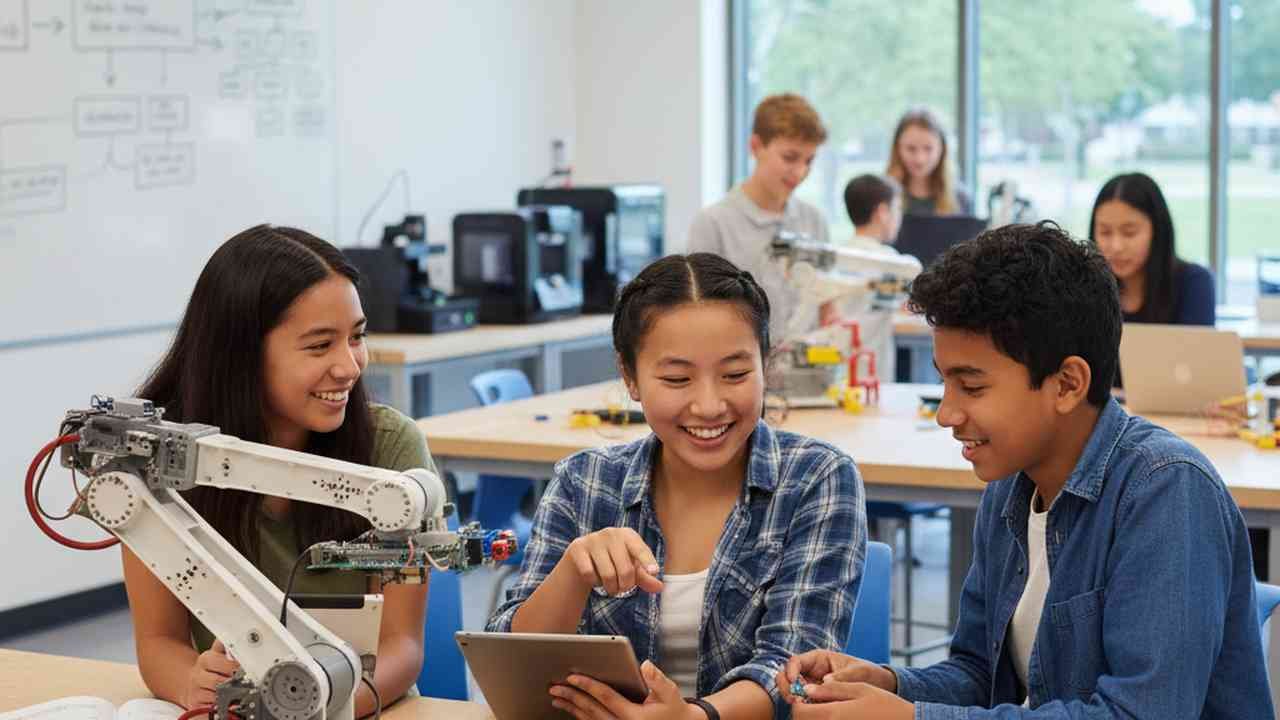
The world is changing fast, and the need for highly skilled, collaborative individuals is at an all-time high. As parents and educators, we constantly seek out innovative ways to prepare children for this ever-evolving future. One of the most effective methods? STEM project kits. These hands-on educational tools not only teach scientific principles but also foster collaboration, peer learning, and the development of lifelong skills. The urgency to integrate these kits into educational settings and home environments cannot be overstated, especially as the demand for problem-solving and teamwork skills skyrockets across industries. Now is the time to act – these kits are transforming the way we learn, and you don’t want to miss out on this revolution.
What Are STEM Project Kits?
STEM project kits are specially designed educational tools that combine science, technology, engineering, and mathematics into a single, hands-on experience. These kits are more than just a set of instructions; they are interactive learning experiences that engage students by requiring them to build, experiment, and problem-solve. With a focus on creativity and critical thinking, STEM kits help children understand complex concepts while working together in teams. From robotic kits to electronics, coding sets, and even chemistry experiments, these kits are designed to make learning both fun and educational. Imagine a child’s face lighting up as they build their own robot from scratch or code a simple game – these moments are priceless and pivotal in sparking curiosity and enthusiasm for learning. In a world where the pace of technological advancement is overwhelming, STEM project kits provide a safe, accessible entry point to the wonders of innovation.
The Power of Collaboration Through STEM Kits
Collaboration is one of the most sought-after skills in today’s job market. However, it doesn’t just appear magically in students; it must be cultivated. STEM project kits do exactly that by encouraging teamwork. When children work together to solve problems, they learn the value of collaboration. They also gain real-world skills, like communication, leadership, and conflict resolution. Whether they are brainstorming ideas for a new design or troubleshooting a malfunctioning circuit, STEM kits force them to interact and depend on each other’s expertise. These skills are invaluable, not just in the classroom but throughout their lives. The benefits are far-reaching, with research showing that children who engage in collaborative activities tend to be more empathetic and possess higher social intelligence. Collaboration is woven into the very fabric of STEM project kits, making them an essential tool for developing these crucial interpersonal skills.
Peer Learning: A Transformative Educational Approach
Peer learning, where students learn from and teach each other, is another core benefit of STEM project kits. These kits create an environment where learners can share their knowledge, troubleshoot together, and reinforce what they’ve learned through teaching others. This approach is a powerful way to deepen understanding because it forces students to articulate their thought processes. Moreover, peer learning increases engagement – students are more likely to invest themselves in the project when they know their peers rely on them. Imagine a group of students working together to program a robot, each taking on a unique task that relies on others’ input. This teamwork not only solidifies their learning but also helps them see different perspectives on solving problems. Peer learning fosters an atmosphere of mutual respect, where students build a sense of community, essential for emotional and intellectual growth.
Building Lifelong Skills with Every Kit
The beauty of STEM project kits lies in their ability to equip students with lifelong skills that go beyond just academic knowledge. These kits prepare students for the challenges of tomorrow by focusing on skills like problem-solving, critical thinking, and creativity. These are the kinds of skills that will serve them in every aspect of their lives, whether they are pursuing a career in engineering, starting their own business, or navigating the complexities of the modern world. Every experiment, every calculation, and every design challenge in a STEM kit encourages students to think outside the box and to approach problems from various angles. For example, imagine a student programming a microcontroller. They’re not just learning to code – they’re learning perseverance, adaptability, and logical thinking, all of which are integral to success in today’s world.
Hands-On Learning: Why It Works
We live in an age of information overload, where passive learning often falls short. STEM kits are a direct response to this need for active engagement. When children build something with their hands, they are not just absorbing knowledge – they are experiencing it firsthand. Hands-on learning is proven to be more effective than traditional methods because it activates multiple senses, helping to solidify the material in long-term memory. For instance, a child constructing a simple machine out of gears and motors doesn’t just read about physics; they feel it. They witness the principles of motion and force in action. This sensory experience deepens understanding, making abstract concepts tangible. Hands-on learning is especially crucial when working with the younger generation, who are more accustomed to interactive, immersive experiences. STEM kits provide that level of engagement, fostering both curiosity and deep comprehension.
Psychological Benefits of STEM Kits
While the academic and practical advantages of STEM project kits are clear, the psychological benefits are equally important. STEM kits encourage a growth mindset, which is vital for overcoming challenges. When students are faced with a problem – be it a tricky puzzle, a faulty circuit, or an unclear design – they learn to view the issue as a challenge to be solved, not a failure. This mindset is crucial for resilience and persistence. Additionally, working through problems in a group helps to reduce anxiety, as students support one another through the learning process. A positive, collaborative atmosphere is key to fostering a love of learning. Moreover, these kits help students develop self-esteem and confidence. With each small success, whether it’s solving a coding error or getting a machine to function properly, students gain a sense of accomplishment and pride. These emotional rewards motivate them to keep exploring, learning, and experimenting.
The Role of Psycho-Educational Assessment in STEM Kits
In today’s educational landscape, psycho-educational assessments play a critical role in understanding how students learn and process information. These assessments allow educators to identify learning strengths and weaknesses, creating tailored educational experiences. For STEM project kits, psycho-educational assessments can help determine the most effective kit for a student based on their cognitive and emotional needs. For instance, a student with a kinesthetic learning style may benefit more from a hands-on electronics kit, while a visual learner may excel with a project that involves creating diagrams or blueprints. These assessments ensure that each student is engaged at the right level, boosting their chances of success. By integrating psycho-educational assessments into the use of STEM kits, educators can further personalize the learning process, creating more impactful and meaningful educational experiences.
Why You Need to Act Now
The world is evolving rapidly, and the demand for skilled, innovative thinkers is only growing. Now, more than ever, we must equip the next generation with the tools they need to succeed. STEM project kits are the perfect solution. But these kits are not just educational tools – they are gateways to future careers, lifelong friendships, and a better world. The earlier children are exposed to these kits, the sooner they can begin building the foundational skills that will set them apart in the workforce. Don’t wait – these opportunities are too important to miss. The time to invest in STEM education is now. Make sure your child has access to the best resources available, and give them the opportunity to develop the skills they need to thrive.