

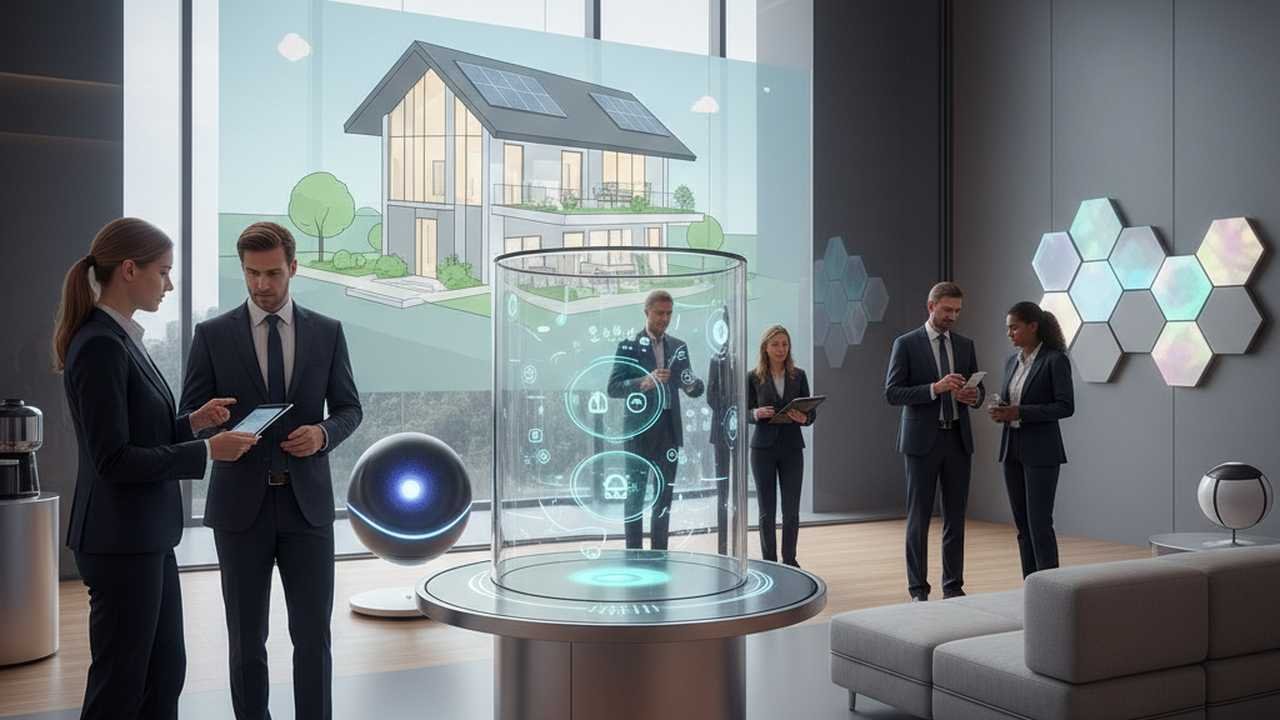
Imagine stepping into your home after a long day, and with a simple voice command, the lights adjust to your preferred brightness, your favorite playlist begins to play, and the thermostat sets the perfect temperature – all without lifting a finger. Welcome to the future of living spaces, where innovative smart home products are transforming the way we experience comfort, convenience, and control. In this article, we’ll delve into the cutting-edge technologies that are revolutionizing our homes in 2025, offering a glimpse into the seamless integration of AI, sustainability, and connectivity that defines modern living.
AI-Powered Home Assistants: The Brain Behind Smart Living
At the heart of every smart home lies an intelligent assistant capable of understanding and anticipating your needs. In 2025, AI-powered home assistants have evolved beyond simple voice commands. They now learn from your routines, preferences, and behaviors to provide a personalized experience. For instance, Google’s Gemini for Home utilizes advanced AI to offer real-time updates on household activities, such as identifying misbehaving pets or detecting nearby vehicles. This level of intelligence ensures that your home is not just smart, but intuitively responsive to your lifestyle.
These AI assistants are also enhancing accessibility for individuals with special education concerns. By providing voice-activated controls and adaptive interfaces, they enable users to interact with their environment in ways that were previously challenging. Whether it’s adjusting lighting for sensory needs or setting reminders for daily tasks, AI assistants are making homes more inclusive and accommodating for everyone.
Seamless Connectivity with Matter Protocol
One of the most significant advancements in smart home technology is the adoption of the Matter protocol, a universal standard that ensures interoperability among devices from different manufacturers. This means that your smart lights, locks, thermostats, and other devices can communicate effortlessly, regardless of brand. Samsung’s recent update to its SmartThings platform allows devices to join existing Thread networks, facilitating a more unified and reliable smart home ecosystem. This seamless connectivity simplifies setup and enhances the overall user experience, eliminating the frustration of compatibility issues.
For families with special education concerns, this interoperability is particularly beneficial. It allows for the integration of specialized devices, such as communication aids or sensory tools, into the broader smart home network. This integration ensures that all devices work harmoniously, providing a cohesive and supportive environment tailored to individual needs.
AI-Driven Security Systems: Protecting What Matters Most
Security remains a top priority for homeowners, and in 2025, AI-driven security systems are setting new standards in protection. These systems utilize advanced algorithms and machine learning to detect unusual activities, recognize faces, and even simulate human presence to deter intruders. Virtual guards, for example, can manipulate lights and sounds to create the illusion of occupancy, enhancing home security without the need for constant monitoring.
For families with special education concerns, these security systems offer peace of mind by ensuring that the home environment remains safe and secure. Features like motion detection and real-time alerts can be customized to accommodate specific needs, such as monitoring for wandering behaviors or ensuring that doors are securely closed. The integration of AI into security systems not only enhances safety but also provides a sense of control and reassurance for caregivers and loved ones.
Health-Focused Smart Devices: Wellness at Your Fingertips
The integration of health and wellness features into smart home devices is a growing trend in 2025. Products like health-monitoring mirrors and smart toilets are capable of tracking vital signs such as heart rate and blood pressure, providing users with valuable insights into their well-being. These devices offer proactive health monitoring, enabling early detection of potential issues and promoting a healthier lifestyle.
For individuals with special education concerns, health-focused smart devices can play a crucial role in monitoring and supporting health needs. Wearable devices that track physical activity, sleep patterns, and other health metrics can provide caregivers with real-time data, facilitating timely interventions when necessary. Additionally, smart home environments can be tailored to support sensory needs, such as adjusting lighting and sound levels to create a calming atmosphere conducive to well-being.
Energy-Efficient Smart Homes: Sustainability Meets Innovation
As concerns about environmental sustainability continue to grow, energy-efficient smart home technologies are becoming increasingly popular. Smart thermostats, automated window shades, and energy-monitoring systems work together to optimize energy consumption, reduce waste, and lower utility bills. These devices learn from user behavior and environmental conditions to make intelligent adjustments that promote energy efficiency.
For families with special education concerns, energy-efficient smart homes offer the opportunity to create a comfortable and sustainable living environment. Adjustable lighting and temperature controls can be tailored to meet sensory preferences, while energy-efficient appliances reduce the environmental impact of daily activities. The integration of sustainability into smart home design not only benefits the planet but also enhances the quality of life for all residents.
Smart Furniture and Appliances: Convenience Redefined
Smart furniture and appliances are redefining convenience in the modern home. From refrigerators that suggest recipes based on their contents to smart vacuums that clean autonomously, these devices are designed to make daily tasks more manageable and efficient. Smart curtains can open and close automatically to regulate natural light, while intelligent kitchen appliances can adjust cooking settings based on real-time data.
For individuals with special education concerns, smart furniture and appliances can provide valuable support in daily routines. Automated systems can assist with tasks such as meal preparation, cleaning, and organization, promoting independence and reducing the need for constant supervision. The customization options available in smart home products allow for the creation of environments that cater to specific needs and preferences, fostering a sense of autonomy and empowerment.
Voice-Controlled Smart Assistants: Hands-Free Convenience
Voice-controlled smart assistants have become an integral part of the smart home experience. Devices like Amazon’s Alexa and Apple’s Siri allow users to control various aspects of their home environment using simple voice commands. Whether it’s adjusting the thermostat, playing music, or setting reminders, voice assistants offer a hands-free and intuitive way to interact with technology.
For individuals with special education concerns, voice-controlled smart assistants provide an accessible means of interacting with their environment. Voice commands can be customized to accommodate speech patterns and language preferences, enabling users to perform tasks independently. The integration of voice assistants into daily routines can enhance communication skills and promote a sense of control and confidence.
Smart Home Ecosystems: A Unified Approach
The concept of a unified smart home ecosystem is gaining traction in 2025. Platforms like Apple’s HomeKit, Google Home, and Amazon Alexa offer centralized control over various smart devices, allowing users to manage their entire home environment from a single interface. These ecosystems enable seamless integration of devices, creating a cohesive and synchronized smart home experience.
For families with special education concerns, a unified smart home ecosystem simplifies the management of assistive technologies and other specialized devices. Centralized control allows caregivers to monitor and adjust settings as needed, ensuring that the home environment remains supportive and responsive to individual needs. The ability to integrate various devices into a single system streamlines operations and enhances the overall functionality of the smart home.
In conclusion, the innovations in smart home technology in 2025 are transforming living spaces into intelligent, responsive, and supportive environments. From AI-powered assistants to energy-efficient systems, these advancements are enhancing comfort, convenience, and inclusivity for all residents. As the smart home industry continues to evolve, the possibilities for creating personalized and adaptive living spaces are limitless. Embracing these technologies not only improves the quality of life but also paves the way for a more connected and sustainable future.