

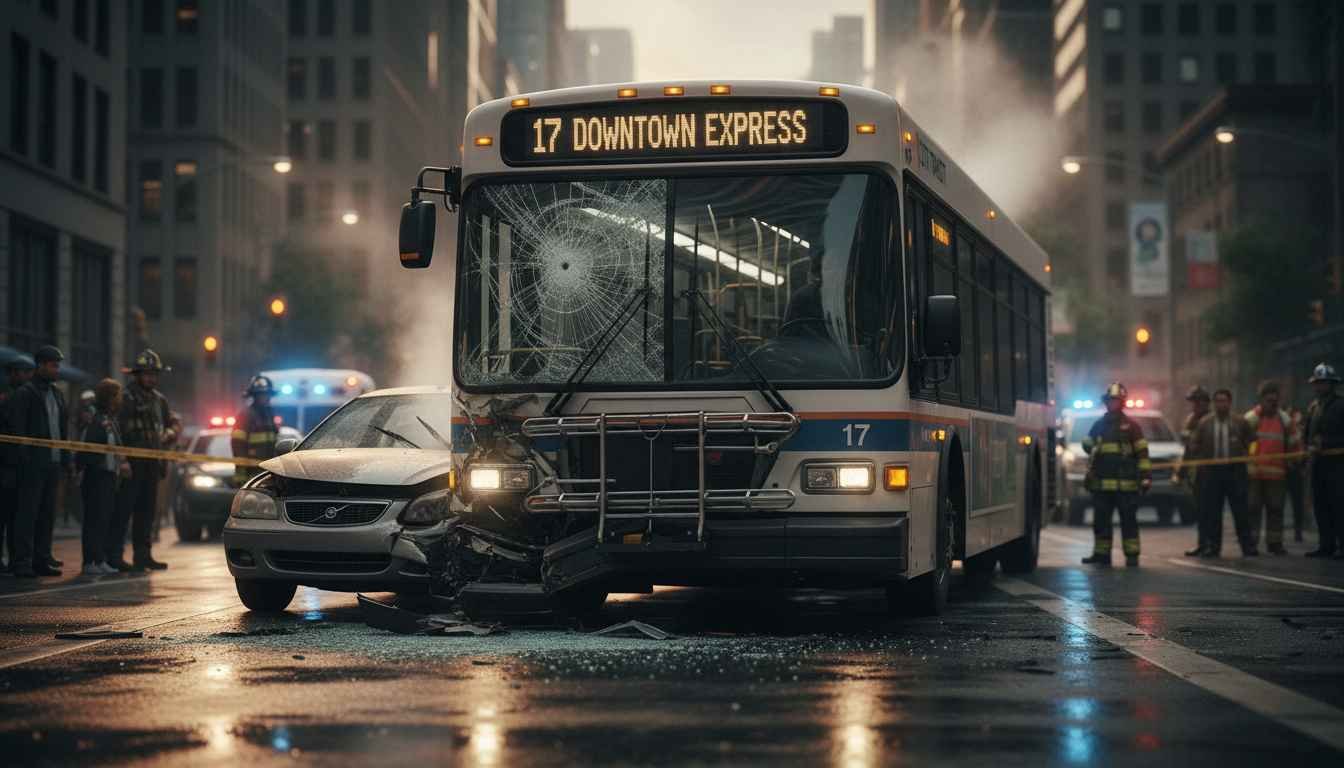
Ready? Set. Go. Another headline flashes across your screen – another accident on public transport. A bus overturns, a commuter train derails, a subway car collides. And we collectively shrug, muttering about bad luck or human error. But let’s not kid ourselves: these are not isolated incidents. They are the result of systemic negligence, outdated infrastructure, and a public transport system that often values schedules over safety.
Every accident leaves scars – both visible and invisible. The physical injuries are obvious: broken bones, concussions, or worse. But the psychological toll on survivors, witnesses, and operators is rarely addressed. Trauma from a train crash isn’t a story to be dismissed over coffee. It lingers, shaping how communities perceive and trust public transport.
Consider the statistics: according to federal reports, over 25,000 incidents on public transport in North America occur each year, ranging from minor collisions to serious derailments. That’s not just numbers – it’s human lives interrupted, routines shattered, and families altered forever. What gnaws at me most is that many of these accidents are preventable. Failures in maintenance, communication breakdowns, and delayed safety upgrades are often the real culprits. And yet, accountability remains murky.
Let’s take rail transport as a glaring example. Freight and passenger lines operate under strict schedules, often pushing infrastructure to its limits. While companies invest in new technology, gaps persist between policy and practice. Signal failures, poorly maintained tracks, and operator fatigue create a perfect storm for disasters. For a deeper look at rail safety protocols and industry insights, The Association of American Railroads (AAR) provides comprehensive data that illustrates both progress and ongoing vulnerabilities.
Bus and subway systems are no safer. Many cities struggle with aging fleets and limited funding for maintenance. The push to expand services quickly – without sufficient investment in safety checks – is a recipe for accidents. Every delay in repairs, every ignored warning signal, is a gamble with lives. Complacency, not chance, is the true hazard lurking behind every “accident on public transport” headline.
It’s easy to assign blame to drivers or operators, but the truth is broader. Decision-makers, regulatory agencies, and funding bodies all share responsibility. A culture that tolerates shortcuts, undervalues inspections, and postpones modernization contributes as much to accidents as human error does. Public transport is a system – a living, complex organism – and ignoring its weak points guarantees repeated crises.
Potential Drawbacks and Who Should Avoid This
This rant isn’t for the faint-hearted or those seeking comfort in statistics. If you rely heavily on public transport, it’s not to say you should avoid it entirely. But awareness is crucial. High-risk groups, such as elderly passengers, individuals with mobility challenges, and frequent long-distance commuters, should stay vigilant. Avoid peak congestion hours when systems are most strained, and familiarize yourself with emergency procedures.
For policymakers, investors, and transit authorities, ignoring safety investments is a short-sighted gamble. Modernization and consistent maintenance are not optional – they are essential. Cutting corners today can result in catastrophic costs tomorrow, both in human lives and public trust.
Why We Keep Repeating Mistakes
Part of the frustration is that these accidents follow patterns. The same types of mechanical failures, human misjudgments, and policy gaps recur year after year. When an incident occurs, investigations often lead to reports and recommendations that languish on shelves. Bureaucracy, political hesitation, and budget constraints stifle progress. The system punishes those who rely on it, while the chain of responsibility remains diffuse.
Accidents on public transport are preventable if we adopt a mindset of foresight rather than reaction. We must anticipate failures before they happen, enforce rigorous safety standards, and prioritize human life over operational convenience. Waiting for disaster to strike before taking action is irresponsible – and tragically common.
In the end, every derailment, collision, and rollover is a warning. A reminder that public transport is not infallible and that vigilance must be constant. Riders, authorities, and industry leaders alike must treat safety as a non-negotiable principle. Otherwise, the next headline isn’t just news – it’s personal.
Summary
Accidents on public transport result from systemic negligence, aging infrastructure, and policy gaps. While headlines focus on human error, underlying causes like poor maintenance, operator fatigue, and underfunded modernization play a significant role. Awareness, proactive safety measures, and investment in infrastructure are essential to prevent repeated tragedies.